
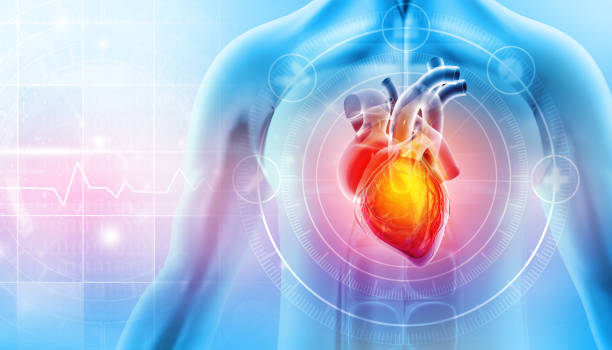
What Does Your Heart’s Electrical System Reveal About Sudden Cardiac Arrest?
The dramatic chest-clutching scene seen in movies, an ultimate heart event, is what we usually picture. What if the actual, quiet threat is not a plumbing issue but an electrical one? Although a heart attack—with its obstructed arteries—is a terrible disaster, it can sometimes be a warning shot. Often a result of such an underlying injury, the most deadly cardiac event hits without the traditional symptoms we are told to notice. This is the reality of Sudden Cardiac Arrest, a disease that exposes a major weakness in our perspective of heart health.
Through a friend’s terrible death rather than via a relative’s crisis, I came to grasp this risk. Five-two, physically fit, he had just completed a half-marathon free of cardiac symptoms. After finishing, he dropped dead on a park bench. The reason was damage from a silent heart attack he had never realized—damage that started a fatal electrical failure. His passing forced me to investigate the heart as an electrical system, which brought me the terrifying truth of Sudden Cardiac Arrest.
What is the Fundamental Difference Between a Heart Attack and Sudden Cardiac Arrest?
We have to first differentiate between the two occurrences to grasp the threat. Circulation is interrupted in a heart attack. View it as though it were plumbing. A blockage in one or more of the coronary arteries cuts off oxygen-rich blood to a section of the heart muscle. That muscle starts to perish if the blockage is not swiftly resolved. The process could be slow, and the symptoms—though frequently severe—can occasionally be subdued and disregarded for hours or even days.
In contrast, sudden cardiac arrest (SCA) is an electrical emergency. It arises when the complex electrical system of the heart—which controls its rhythm—stops working all of a sudden. The most frequent cause is ventricular fibrillation, a condition where the lower chambers of the heart shake wildly rather than pushing blood.
Effective heartbeat ceases immediately, as this stops the blood supply to the major organs and brain. The person falls, loses consciousness, and ceases breathing. SCA is deadly within minutes if not treated right away. Although cardiomyopathy and other conditions can cause SCA, it is frequently the heart attack’s resultant scar tissue that forms the electrical short circuit.
How Can a Seemingly Healthy Heart Suddenly Stop?
This is the most confusing and scary part about SCA. Often, the basis is an undetected heart disease. Even a silent heart attack leaves behind scar tissue from a prior one. Like a barrier on the electrical highway of the heart, this scar tissue may lead to short circuits that cause ventricular fibrillation. Cardiomyopathy, in which the heart muscle grows or thickens, and Congestive Heart Failure, a chronic ailment in which the heart’s pumping capability diminishes, thereby increasing its sensitivity to aberrant rhythms, are among other frequent suspects.
The quiet carries the peril. Many of these ailments may go unnoticed for years with little or no symptoms. One could believe their unusual tiredness, relate mild shortness of breath to being out of shape, or dismiss little heart flutters as worry. The first and only indicator of this underlying electrical instability may be a sudden collapse without proactive screening, especially for those with risk factors.
What Are the Warning Signs We’re Trained to Miss?
Culturally, we seek the Hollywood heart attack: excruciating chest discomfort going down the left arm. But the conditions that lead to electrical failure can be far more unclear. We disregard them as symptoms of stress, ageing, or simply a bad day. Important red flags deserving a doctor chat are unexplained fainting or near-fainting episodes, which could point to a transient arrhythmia.
Never should racing or erratic heartbeats be disregarded, especially if they occur at rest or without inducement. Especially in family members under 50, a family history of unexplained sudden death is a strong predictor of probable inherited electrical heart problems. And perhaps the most underappreciated, unrelenting, strange weariness and breathlessness disproportionate to effort can signal a heart battling to keep a constant rhythm and output.
What Does Survival Depend On When the Heart’s Electricity Fails?
The quickest beginning of the Cardiac Chain of Survival is the most crucial element in surviving SCA. This is not a circumstance where you drive to the hospital. Brain cell survival determines time. The first connection is immediate recognition and the call of emergency services. The second is early CPR, which manually pumps blood to the brain, buying invaluable time.
The most important connection, though, is the third: fast defibrillation. An Automated External Defibrillator (AED) is the only instrument able to examine the heart’s rhythm and administer an electric shock to reset it to a regular pattern. For every minute without defibrillation, the likelihood of survival falls by 7–10%.
This explains why the spread of AEDs in public areas—airports, gyms, offices—and public awareness of CPR are not merely nice-to-haves; they are critical parts of a community’s healthcare infrastructure. Had an AED been present and used within two minutes, the result for my friend who passed away in a public park could have been very different.
How Can We Move From Reactive Fear to Proactive Heart Health?
The conclusion of SCA is evident: replace proactive awareness with fear. For clear action, forego the passive wait-and-see strategy. Know every aspect of your family’s history. Whatever little, go over every symptom with your doctor. For at-risk people, this could entail drugs or an Implantable Cardioverter Defibrillator (ICD), a device that serves as a built-in guardian, monitoring the heart and administering a life-saving shock if a hazardous rhythm is discovered.
Knowing the heart’s dual character as both a mechanical pump and an electrical generator is the secret. Concentrating just on cholesterol and blood pressure, we are only servicing the pipelines. The heart’s wiring also needs to be checked. It calls for paying attention to the faint signs our bodies provide and for advocating a culture of readiness in which learning CPR and helping the public gain access to AEDs is seen as a basic civic responsibility. Though we too frequently dismiss it, the steady persistence of a heart is evidence of a sophisticated and brittle electrical symphony we are just beginning to fully understand.
This article aspires to empower with information. For tailored advice, always speak with a qualified healthcare expert. New platforms like www.ravoke.com , which is devoted to amplifying expert voices and promoting change in health outcomes via engaging, science-backed content and thought leadership, such as their forthcoming docuseries “Four Days,” help to generate discussion around proactive heart health.